Bar & Taproom
Bar & Taproom QR Menu
A taproom with sixteen rotating lines cannot print a menu. By the time the print run arrives, three of the beers on it are gone. Which is why bars have been running chalkboards for a century — and why they are the venue type digital menus help most.
Change a line when the keg blows, from behind the bar, in ten seconds. The code on the table never changes.
150+ restaurants, cafés and bars on Web Gerek
The Tap List Is the Whole Argument
No other venue type has a menu that turns over this fast. A busy taproom might change three or four lines in a week; a bar with a serious cocktail programme rewrites a third of its list every season. Printing against that is not economical, so bars solve it with chalkboards, and chalkboards have three problems everyone has quietly accepted.
They are only legible from part of the room. A guest in a booth on the far wall is reading a blur, and asking a bartender to recite sixteen beers across a busy bar is how you lose four minutes a round.
They have no room for detail. A chalkboard fits a name, a style and a price. It does not fit ABV, IBU, the brewery, the format, or a tasting note — which is precisely the information a guest choosing between six IPAs actually needs.
And they go stale within a shift. The keg blows at nine, someone means to update the board, and the next four guests order something that ran out an hour ago.
A digital list solves all three at once, and the update happens where the person who noticed is standing. The bartender who pulls the empty keg hides the line from their phone before they walk back to the bar.
ABV and IBU belong on the list
The two numbers that most determine what a guest orders, and the two a chalkboard has no room for.
Format and pour size
Whether it is a half, a pint or a 10oz because it is nine percent — say it on the menu instead of at the bar, every time.
Hide the line, do not erase it
A blown keg is hidden in seconds and unhidden when the next one lands. No retyping the entry each rotation.
Keep the board for atmosphere
The chalkboard is part of the room. Let it carry the headline and let the code carry the sixteen lines and their details.
High Contrast, Because the Room Is Dark
Heavier type on strong backgrounds. A pale, thin-typed design that looks elegant on a laptop becomes work at a candlelit table.
Newspaper
Open full screen →Swiss
Open full screen →Designing for a Dark Room
Bars are where design choice stops being taste and becomes function, and it is the single most common mistake we see.
A menu built and approved on a laptop in daylight can be genuinely hard to read at a candlelit table. Thin, light-weight type on a pale background is the specific failure: it looks refined on a bright screen at reading distance and dissolves at dining distance in low light.
There is a second-order cost too. A guest who cannot read the menu turns their screen brightness up, and now there is a small floodlight at table six in the room you paid a designer to make feel intimate. A high-contrast design at moderate brightness is more readable and less disruptive than a pale one at maximum.
So for a dark room: pick high contrast, heavier type, and restraint with imagery. Among the nine, Luxury, Swiss and Newspaper hold up best. Then do the test that actually decides it — take a phone to the darkest table in the room at the hour you are busiest, and read your own menu from where a guest sits.
Alcohol Rules Are Set by Your State, Not by Us
One genuine caution, and we would rather give it plainly than let a digital menu become the place a venue discovers it.
Alcohol pricing and promotion in the United States is regulated at state level, and the rules vary sharply. Several states restrict or prohibit time-limited drink discounting outright, and the picture changes — Indiana’s rules were loosened in 2024. Whether you can publish a happy-hour price, how you may describe a promotion, and what you may say about alcohol content are all questions for your state liquor authority.
What that means practically: before you publish a happy-hour section or a promotional price on a public web page, check what your state permits. A menu behind a QR code is a published document with an address, more visible and more permanent than a chalkboard, and “it was only on the board” is not a position you want to be arguing.
We do not build any of this into the product, and no menu vendor can. There is no software setting for fifty states’ liquor codes. What we can do is give you fields that make it straightforward to publish exactly what you have decided to publish, and to change it the day the rules or your programme change.
Designs
11 QR Menu Designs
All of them are included on the free plan. Switch designs later in one click — your categories, items and photos carry over untouched.
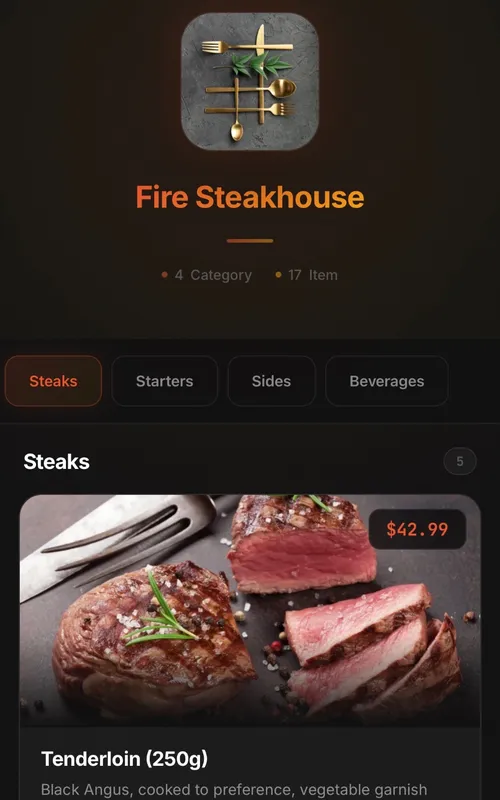
Classic
Digital QR menu for restaurants and cafes
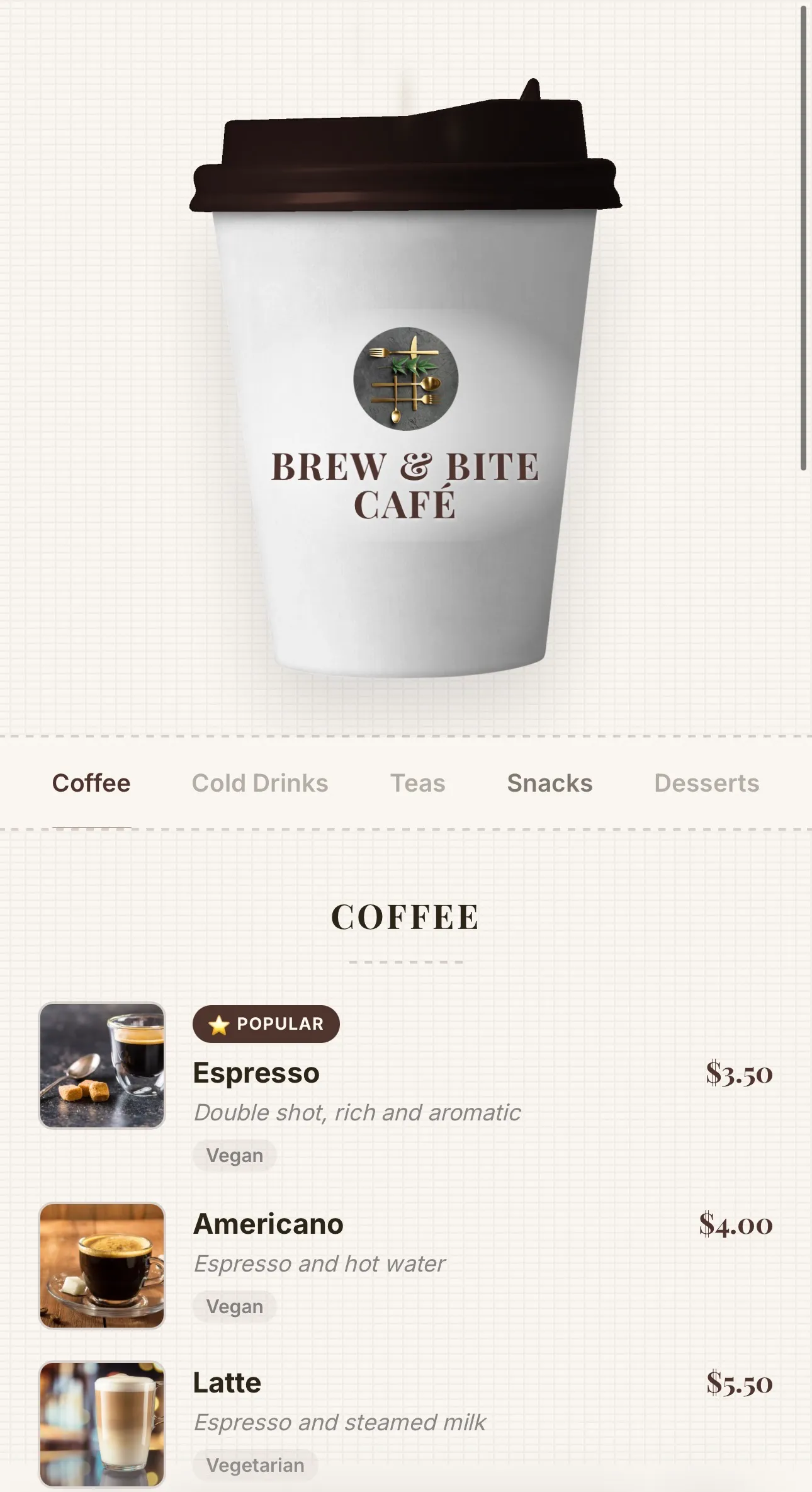
Coffee
Coffee-cup menu for cafés — lid recolours to your theme, café name printed on the cup, and rising steam
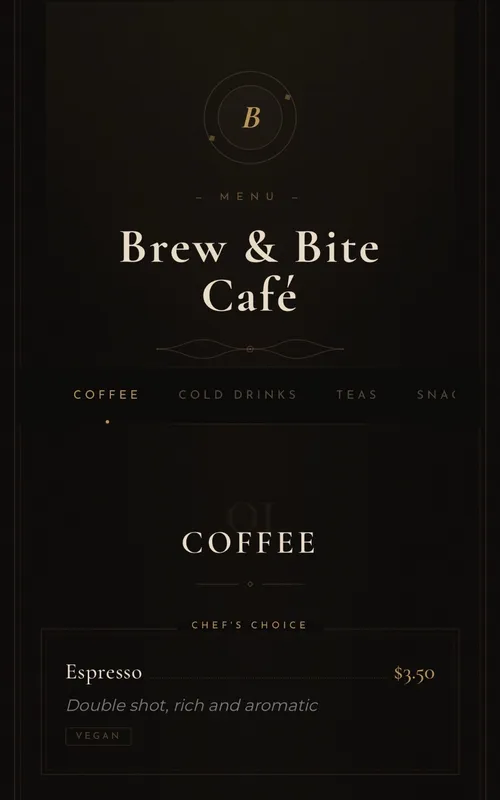
Luxury
Elegant typography-based menu for fine-dining restaurants
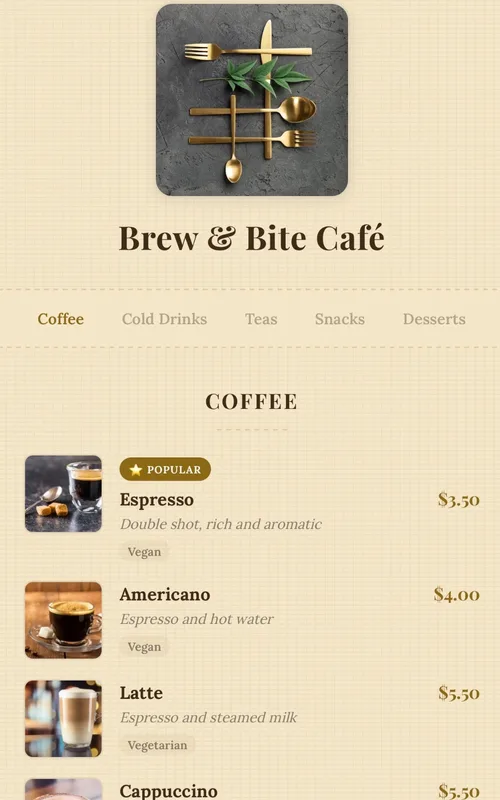
Kraft
Handcrafted paper-textured artisan menu — warm tones, serif typography and dotted price leaders
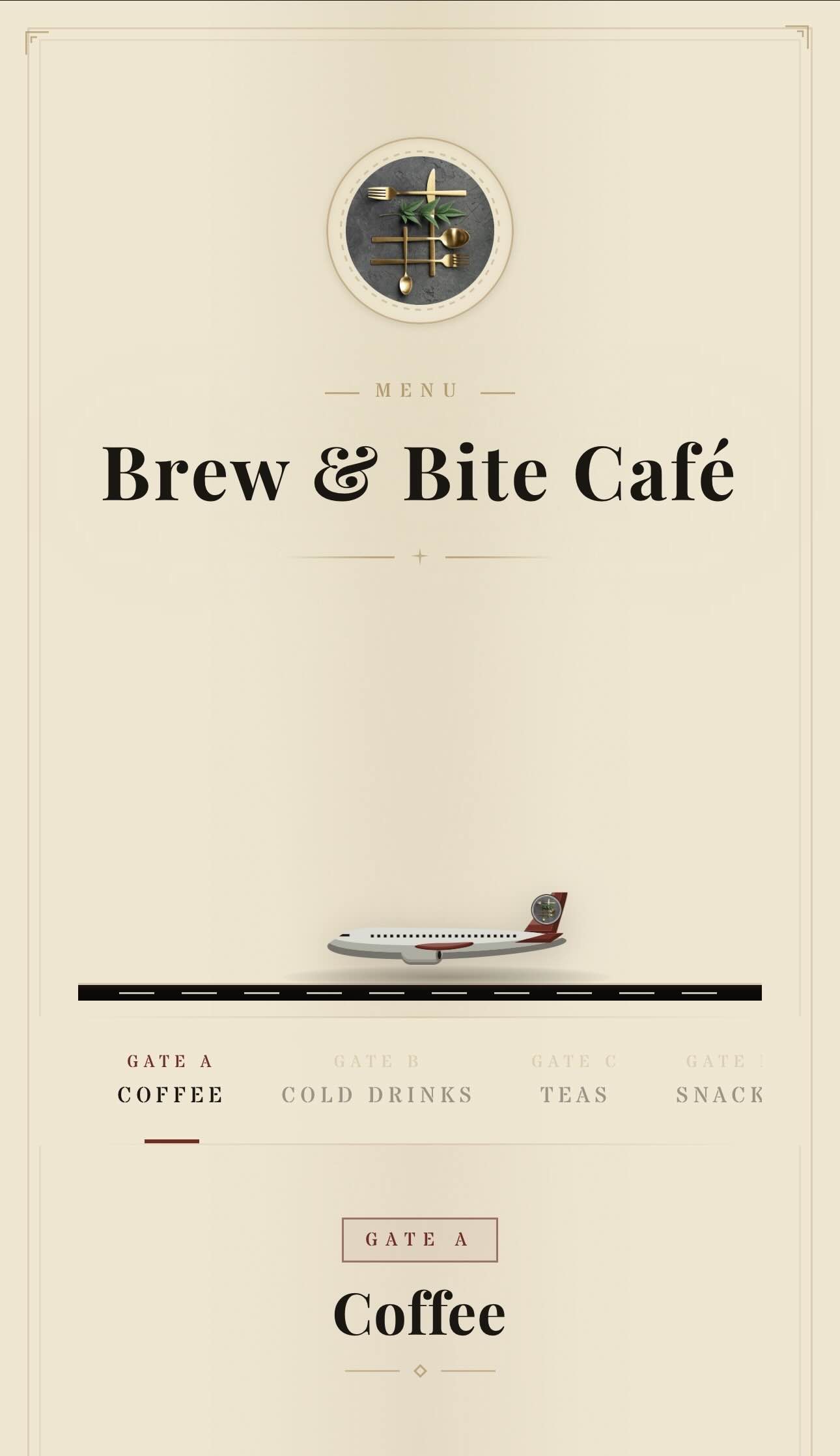
Aviation
Vintage aviation-themed QR menu — animated planes, runway and brass details
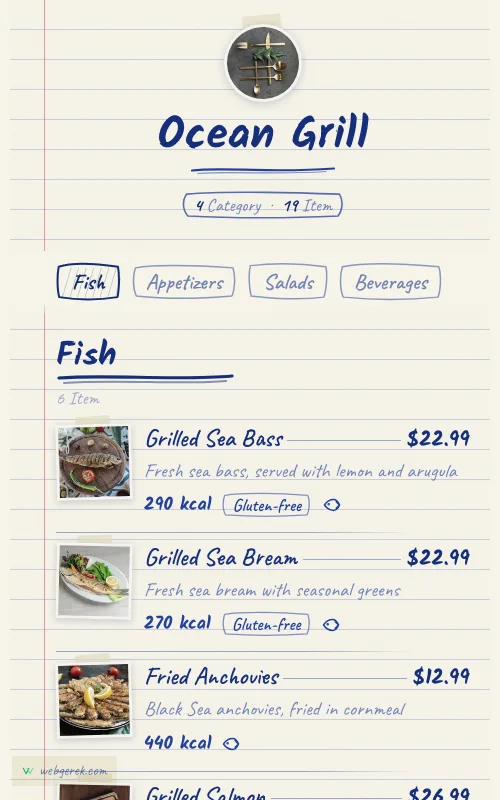
Ballpoint
Handwritten menu in blue biro on ruled notebook paper — course headings in a thicker pen, photos taped to the page
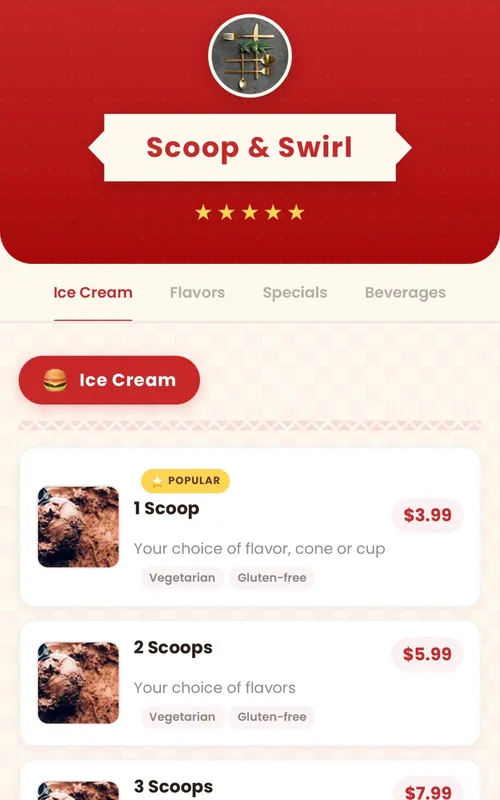
Retro
Fun retro diner-themed digital menu — checkered patterns, ribbon banners and colorful category badges
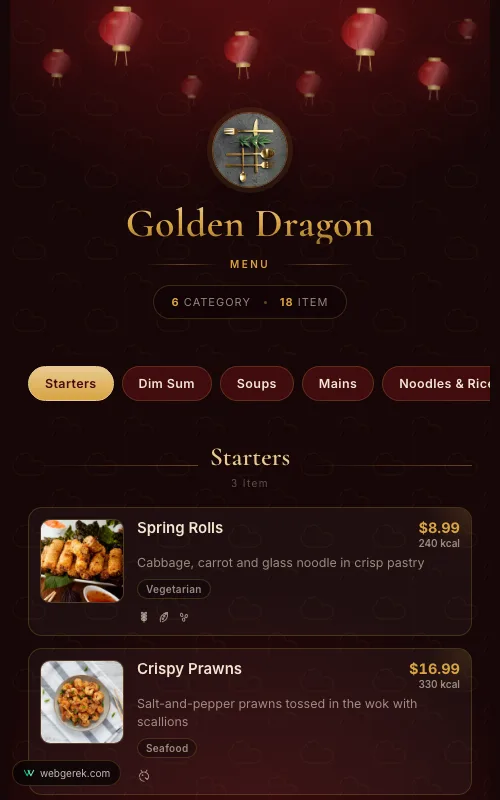
Lantern
Lacquer-red and gold menu under drifting paper lanterns — for Chinese, far-eastern and pan-Asian restaurants
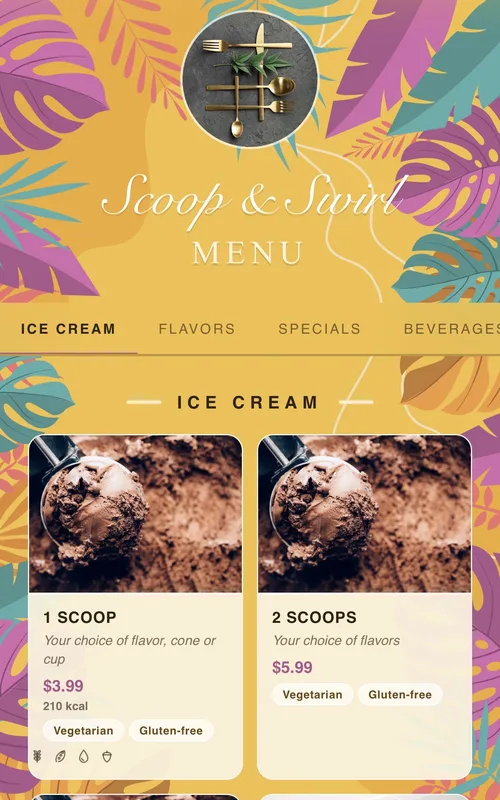
Tropical
Sunny summer-themed menu framed by tropical leaves and flowers — for cocktail bars, beach venues and summer cafés
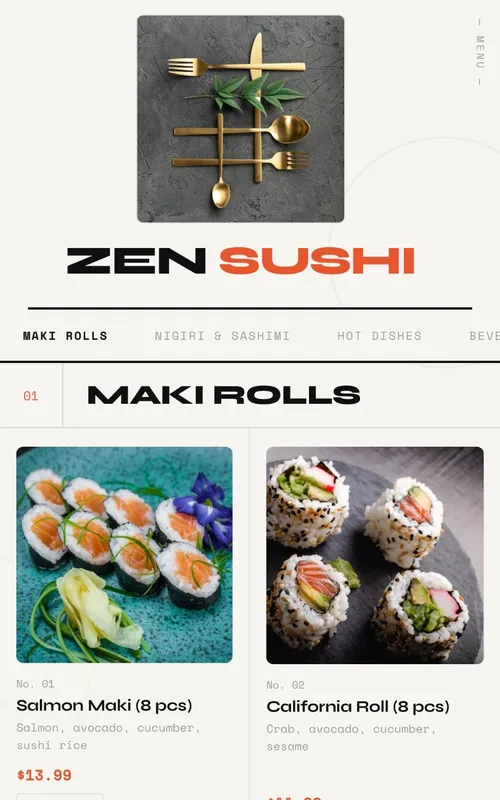
Swiss
Modern menu design with geometric grid layout, bold typography and animations
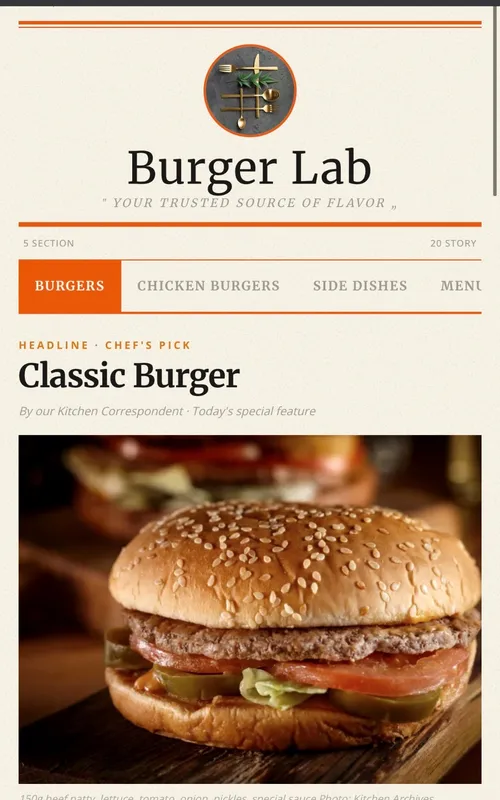
Newspaper
Newspaper-themed creative digital menu — dishes presented as headlines, columns, and news
Frequently Asked Questions
How fast can I take a beer off the list when the keg blows?
Can I show ABV and IBU for each beer?
Which design works best in a dark bar?
Can I list happy-hour prices on the menu?
Related Pages
Your Menu, Live in 10 Minutes
Start on the free plan. No credit card, and no per-table or per-scan fees.
150+ restaurants, cafés and bars on Web Gerek