Food Truck
Food Truck QR Menu
A food truck menu has to survive wind, direct sun, a queue that moves, and running out of the pork at one-fifteen. A vinyl board handles none of those well, and reprinting one costs more than a month of software.
Free plan is genuinely enough for a single truck: one published menu, all 11 designs, and your location and hours on the same page.
150+ restaurants, cafés and bars on Web Gerek
The Board Is the Problem
Almost every operational complaint about a food truck menu traces back to the physical board.
It fades. A vinyl or coroplast board in direct sun for a season loses contrast until the prices are the hardest thing on it to read. It catches wind — an A-frame in an open lot is a hazard and a chase. It is fixed at the moment it was printed, so a price increase means either a sticker over the old number or living with it until the next order. And it is sized for the truck, which means at a busy service the people who most need to read it are the ones standing too far back to see it.
A code changes what the board has to do. It stops being the menu and becomes a sign that points at the menu, which means it can be small, weather-resistant, and permanent — because the thing that changes is no longer printed on it.
That reframing is the whole argument. Print one durable sign with a code and your truck’s name. Everything volatile — prices, items, today’s specials, what has sold out — lives behind it and costs nothing to change.
One durable sign, not a reprinted board
The sign carries a code and your name. Neither changes, so it can be laminated, screwed on, and forgotten.
Matte, never gloss
Outdoors in daylight, gloss laminate reflects sun straight into the camera. Matte scans in conditions gloss will not.
Print it large
A queue reads from further back than a table does. Scanning distance is roughly ten times the code’s width — size for the back of the line, not the window.
Put one on each side
Queues form where they form. A code only on the service window is unreadable to two-thirds of the people waiting.
Short Menu, Big Tap Targets
Designs that work for a ten-item list read one-handed by someone standing in a queue in bright sunlight.
Retro
Open full screen →Tropical
Open full screen →Selling Out Is a Feature, Not a Failure
Trucks run out. Prep space is a few square feet, you cooked what you could carry, and the popular item goes at one-fifteen on a good day. Running out is a sign the day went well; explaining it forty times is what makes it exhausting.
On a printed board there is no move available except a hand-lettered SOLD OUT sticker, and every guest reads the item, decides on it, and gets told no. That is forty small disappointments and forty conversations that slow the window down at exactly the moment the queue is longest.
Hiding the item takes ten seconds from a phone in the truck. Everyone who scans after that sees a menu of things you actually have, orders faster, and never experiences the disappointment. The window moves quicker precisely when it matters most.
The same mechanism handles the other direction. A special you decided on at six that morning goes up before you drive out. A price you had to raise because your supplier raised theirs goes up between services. None of it involves a printer.
The Menu Is Also Your “Where Are We Today” Page
This is the part that separates a truck from a fixed venue, and most menu products ignore it.
A restaurant’s address never changes. A truck’s changes daily, and the single most common question a truck receives is not what do you serve, it is where are you. Most operators answer that on social media, where it is visible for a few hours to whoever happens to be scrolling and invisible to everyone searching later.
Because a Web Gerek menu is a real web page carrying your location, hours and phone number, it can answer both questions at one address. That address is stable — it goes in the Instagram bio, on the truck, on a flyer, in the event listing — while what it says about where you are today changes as often as you like.
It is also indexable, with an SEO sitemap and IndexNow on every plan including free, which matters more for a truck than for a restaurant. You do not have a storefront generating passing trade or a stable Google Business Profile address to anchor you. A page that is genuinely findable is doing work that a physical location does for everybody else.
The honest limitation: this is a menu page with your details on it, not a route planner or an event calendar. If you need a live map of where the truck is right now, that is a different product. What this gives you is one stable address that always says what you serve and where you are today.
Designs
11 QR Menu Designs
All of them are included on the free plan. Switch designs later in one click — your categories, items and photos carry over untouched.
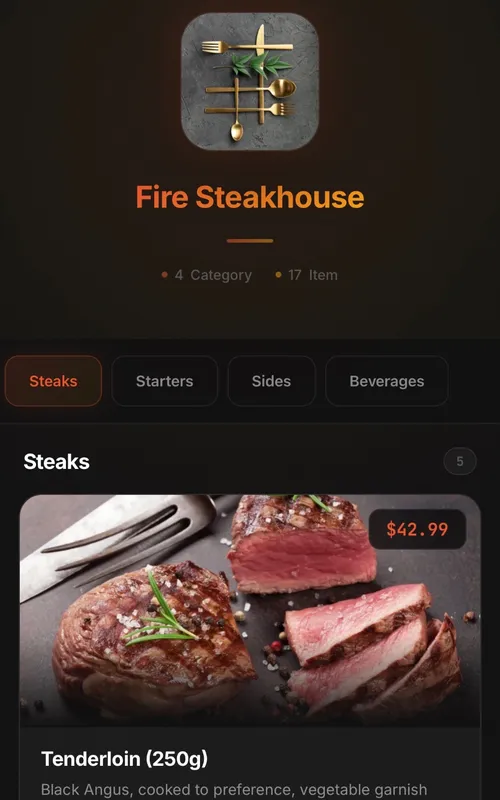
Classic
Digital QR menu for restaurants and cafes
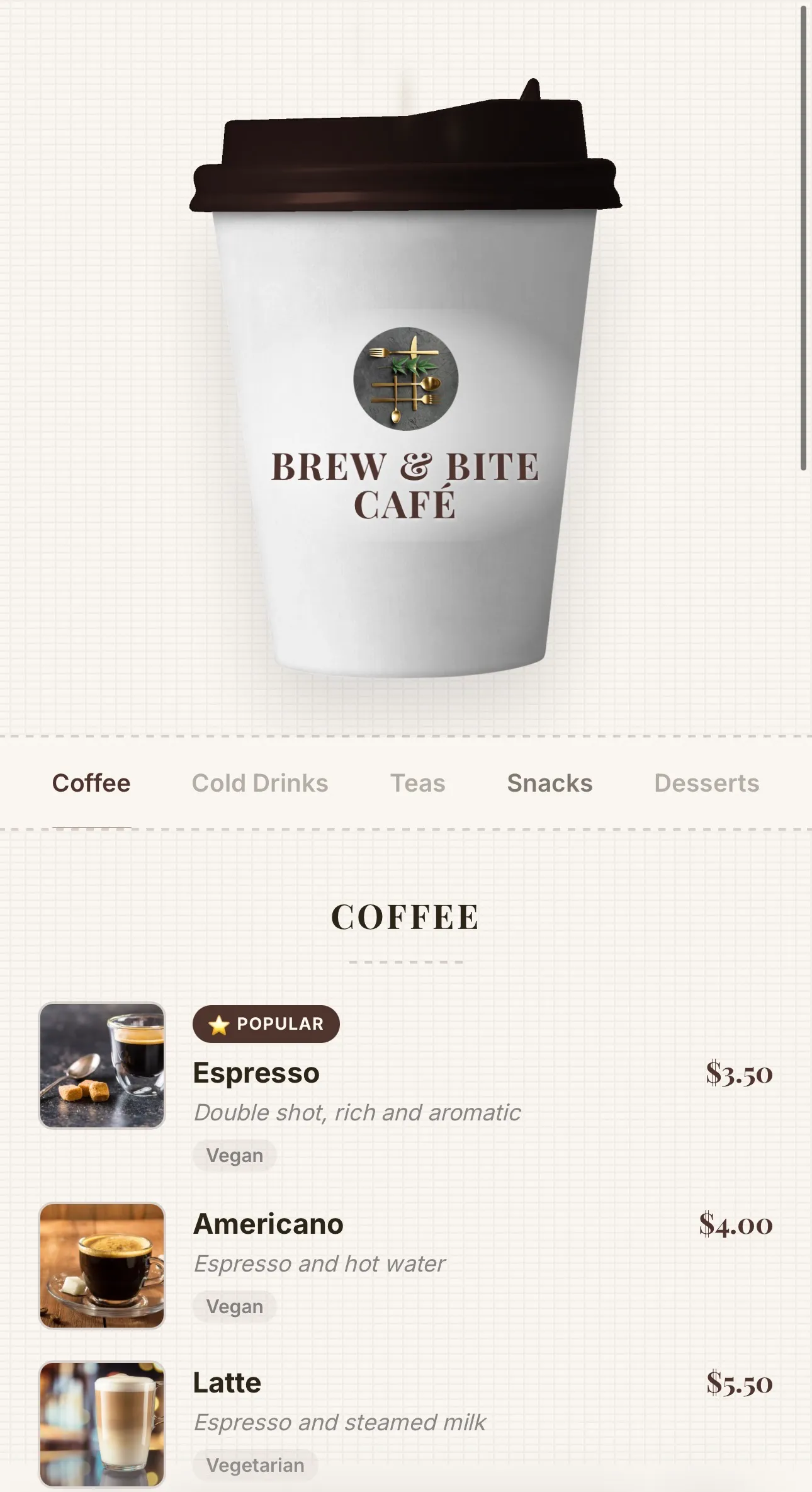
Coffee
Coffee-cup menu for cafés — lid recolours to your theme, café name printed on the cup, and rising steam
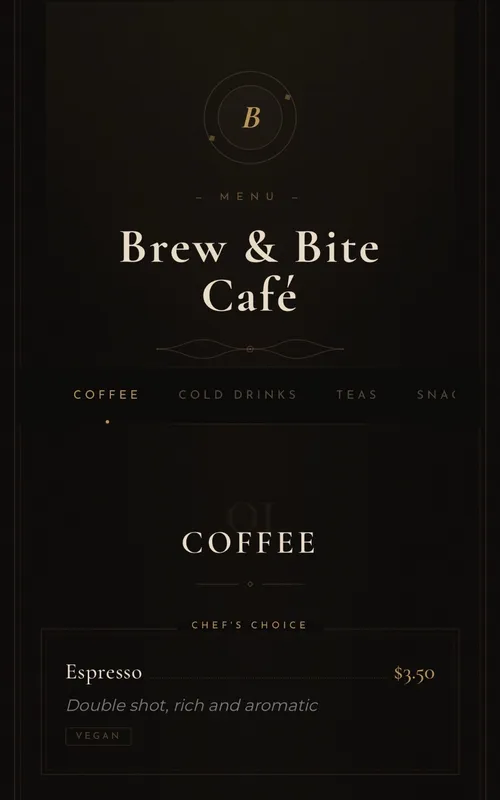
Luxury
Elegant typography-based menu for fine-dining restaurants
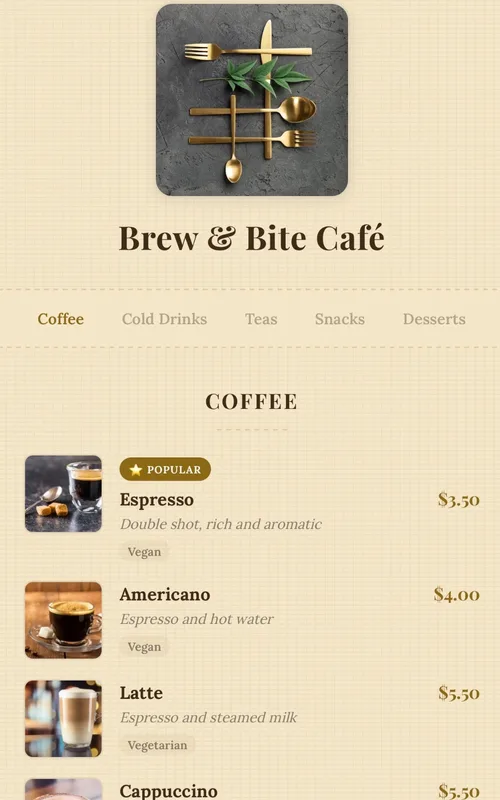
Kraft
Handcrafted paper-textured artisan menu — warm tones, serif typography and dotted price leaders
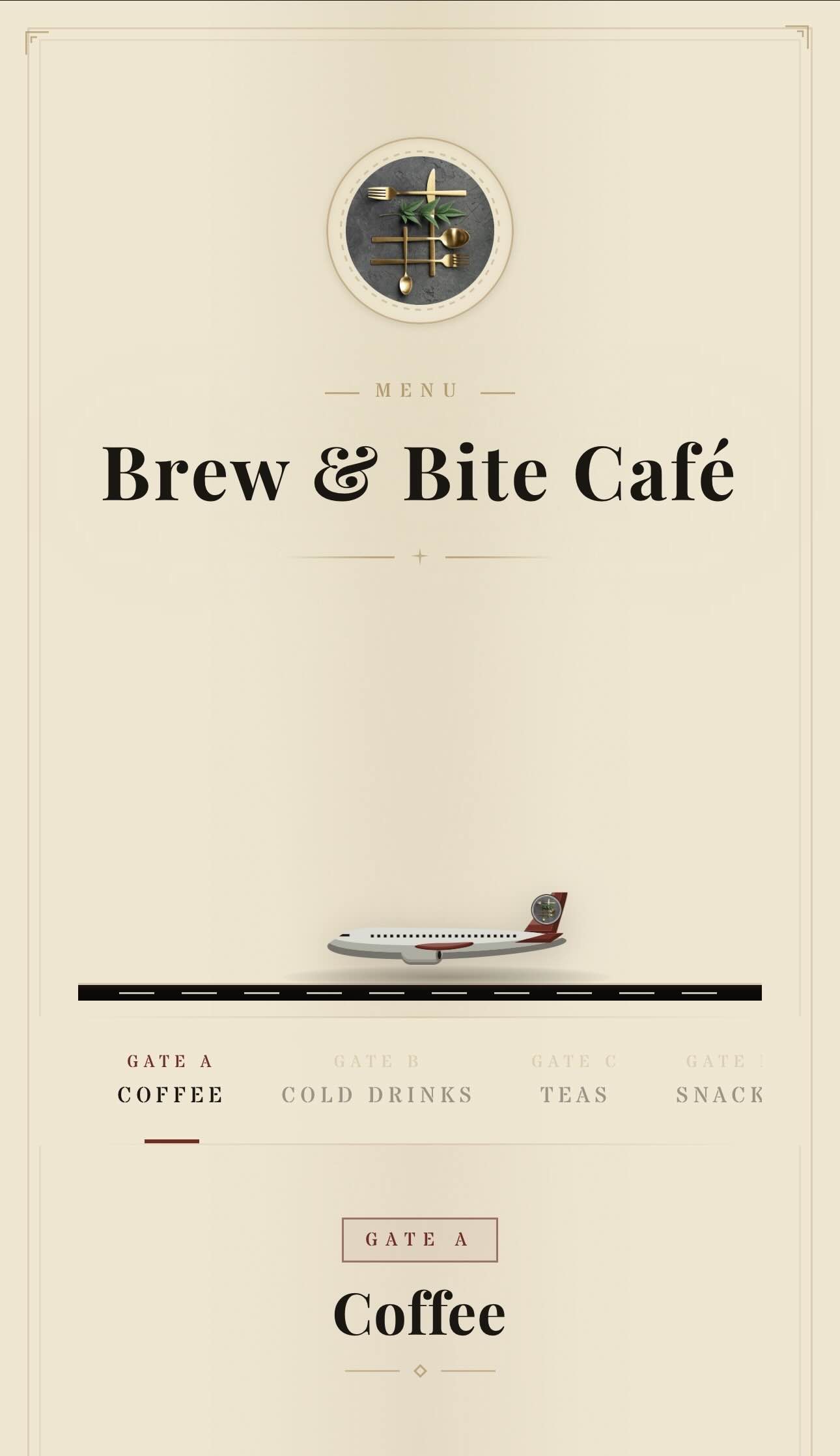
Aviation
Vintage aviation-themed QR menu — animated planes, runway and brass details
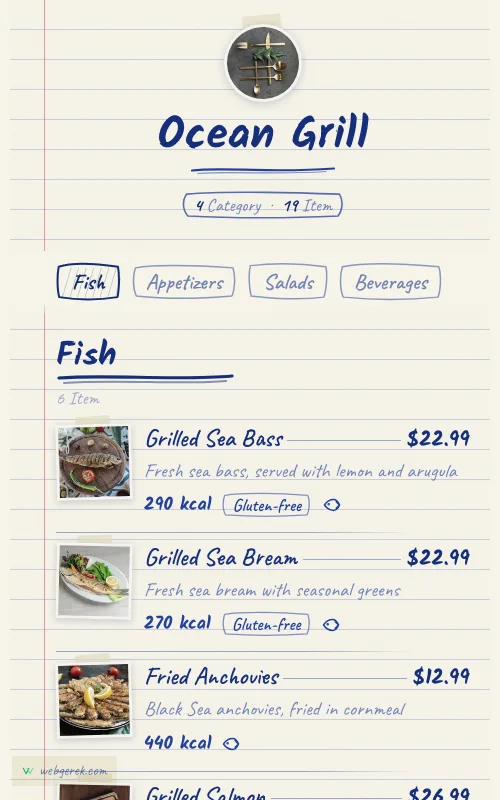
Ballpoint
Handwritten menu in blue biro on ruled notebook paper — course headings in a thicker pen, photos taped to the page
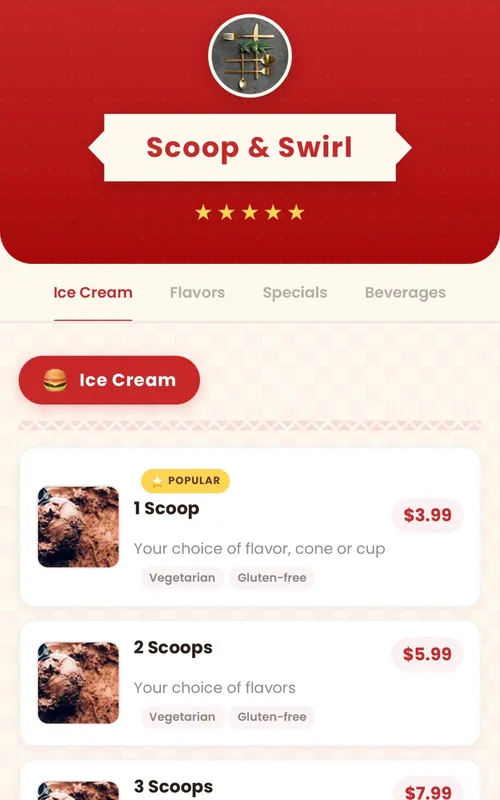
Retro
Fun retro diner-themed digital menu — checkered patterns, ribbon banners and colorful category badges
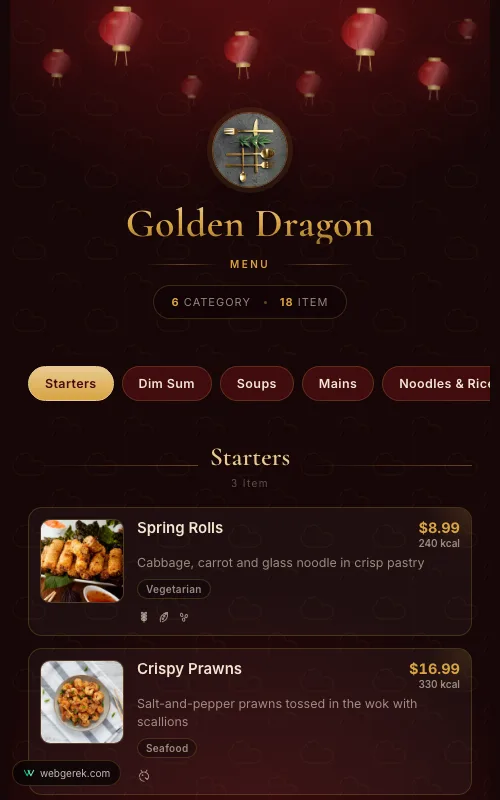
Lantern
Lacquer-red and gold menu under drifting paper lanterns — for Chinese, far-eastern and pan-Asian restaurants
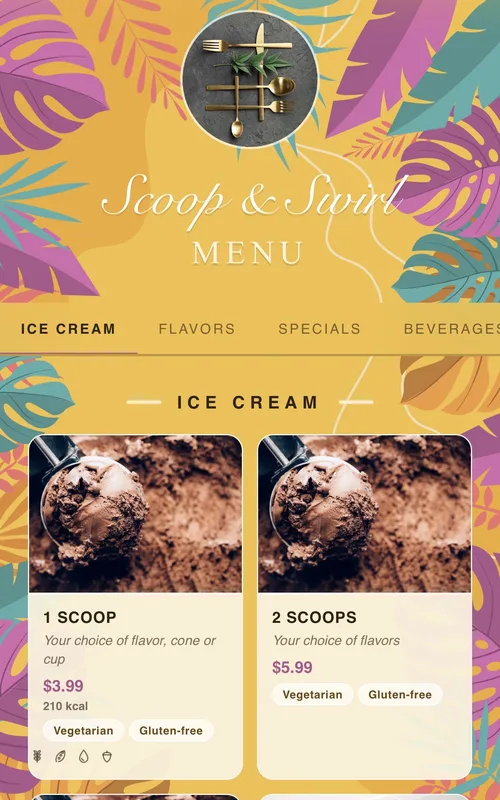
Tropical
Sunny summer-themed menu framed by tropical leaves and flowers — for cocktail bars, beach venues and summer cafés
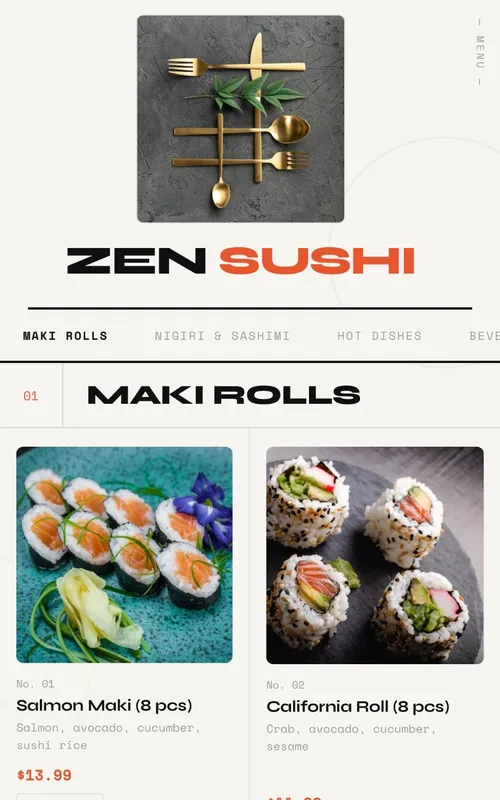
Swiss
Modern menu design with geometric grid layout, bold typography and animations
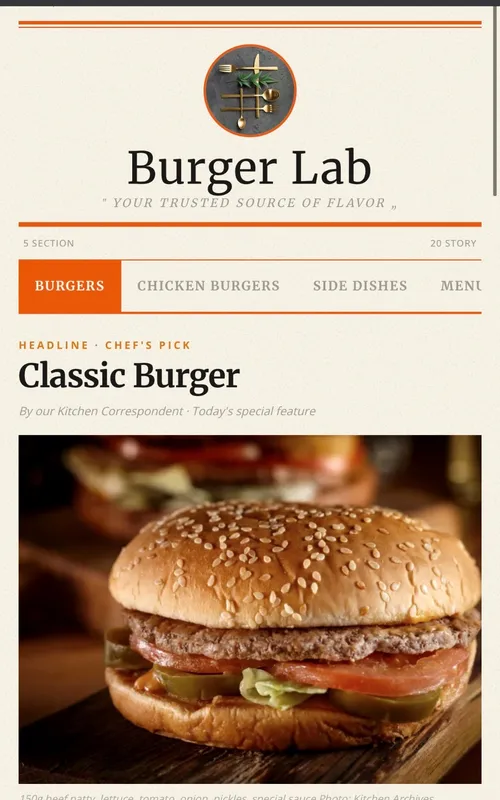
Newspaper
Newspaper-themed creative digital menu — dishes presented as headlines, columns, and news
Frequently Asked Questions
Will the QR code scan in bright sunlight?
What if the venue I am parked at has no cell signal?
Can I change prices between services on the same day?
Is the free plan enough for one truck?
Your Menu, Live in 10 Minutes
Start on the free plan. No credit card, and no per-table or per-scan fees.
150+ restaurants, cafés and bars on Web Gerek