Coffee Shop QR Menu
Coffee Shop QR Menu
A café menu changes more often than a restaurant’s and has a harder structural problem: three sizes times four milks times two shot options is not twenty-four menu items, but a printed menu has no way to say so.
Free plan covers a single-location café completely — one published menu, all 11 designs, allergen fields for the milk question.
150+ restaurants, cafés and bars on Web Gerek
The Modifier Problem, and How Not to Solve It Badly
Every café hits this within a week of building a digital menu. A latte comes in three sizes. It can be made with whole, oat, almond or soy. It can be single or double shot. Represented as separate items that is twenty-four entries for one drink, and a menu nobody can read.
The wrong solution is to create them all. The menu becomes a list where the eye cannot find anything because every third line is a near-duplicate of the one above.
The right shape is one item, with the variants in the description and the price structure stated once. “Latte — 12oz / 16oz, oat, almond or soy +75¢.” One line the guest reads in two seconds, instead of six lines they have to compare. Split into separate items only where the difference is genuinely a different drink rather than a different size of the same one — a cortado is not a small latte, and should be its own entry.
The same discipline applies to your food case. A pastry list is short and changes daily; it wants to be a category of six or eight items you edit each morning, not a permanent list with half of it crossed out.
Built for a Drinks List
Short categories, clear pricing, and room for the origin note that a printed board never has space for.
Kraft
Open full screen →Retro
Open full screen →Rotating Beans and the Origin Note
Speciality cafés have an information problem that printed menus solve badly: the coffee changes, and the interesting part is exactly the part that changes.
When you rotate a single origin every few weeks, the printed board says “filter coffee” and a chalk scrawl says the rest, if there is room and if someone remembered. Everything that justifies the price — producer, region, process, what it actually tastes like — either lives in a server’s head or does not get communicated at all.
On a digital menu that information costs nothing to carry. The current single origin gets a real description with its producer and tasting notes, and when the next lot lands you change the text rather than the board. Guests who care read it; guests who do not scroll past. Nothing about the printed code changes.
This is also the cheapest staff training you will ever do. A new barista in their first week can read the current origin note off the same menu the guest is reading, which is a considerably better answer than an improvised one.
Give the current origin its own entry
Producer, region, process, tasting notes. Update the text when the lot changes; the code on the counter never moves.
Milk alternatives are an allergen question
Soy and most nut milks are major allergens; oat is a concern for gluten-sensitive guests. Mark them. It is voluntary in the US and it is the single most-asked question at a café counter.
Keep the food case editable by whoever is on
The pastry list changes daily and sells out unevenly. The person who can hide an item should be the person behind the counter, not the owner.
Put a code on the counter, not just the tables
A queue is dead time and the best possible moment for someone to read your menu properly. Most cafés only code their tables and miss it entirely.
Reading in a Queue Is a Different Job
Café menus get read in two quite different situations and most are only designed for one.
At a table, the guest has time. They are seated, they may be staying an hour, they will scroll. Depth is welcome — the origin note, the food case, the description of what a cortado actually is.
In a queue, they have about forty seconds and one hand, and someone is behind them. What they need is the drinks list, the prices, and nothing between those and their eyes. If your first category is a long food-case list, a queueing guest reaches the counter without having found the coffee.
The resolution is category order rather than two menus. Drinks first, always, because that is what the queue is deciding. Food case second. Anything discursive — the origin story, the retail bags, the loyalty details — last, where the seated guest will still find it and the queueing guest will not have to scroll past it.
If you have both a counter and a seating area, that ordering serves both. It is a five-minute decision at build time that most cafés get backwards because they built the menu in the order the printed board happened to use.
Designs
11 QR Menu Designs
All of them are included on the free plan. Switch designs later in one click — your categories, items and photos carry over untouched.
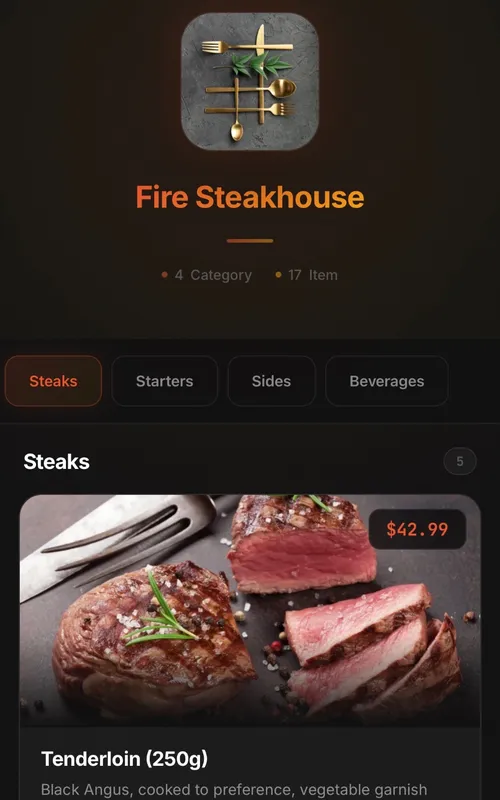
Classic
Digital QR menu for restaurants and cafes
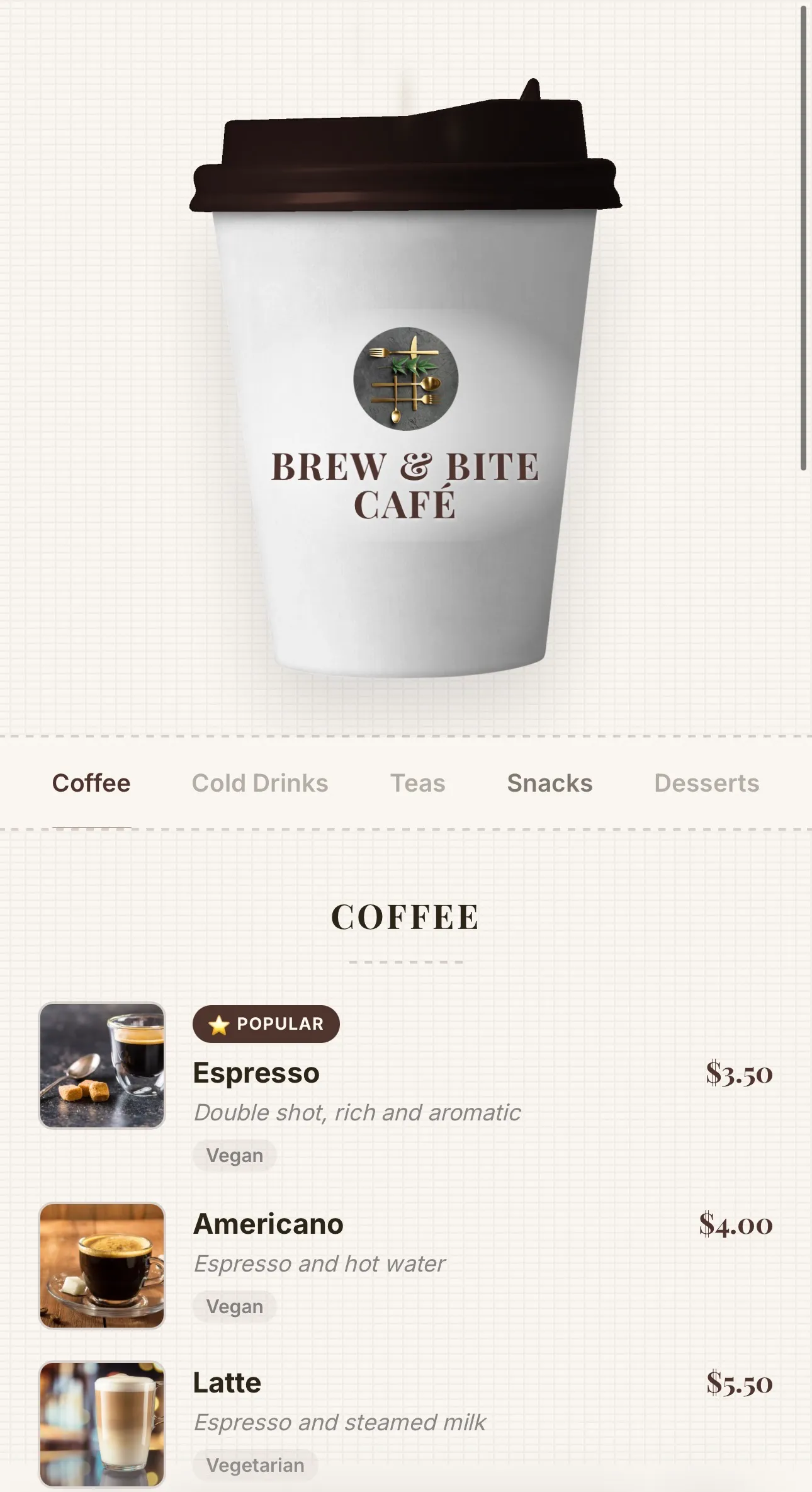
Coffee
Coffee-cup menu for cafés — lid recolours to your theme, café name printed on the cup, and rising steam
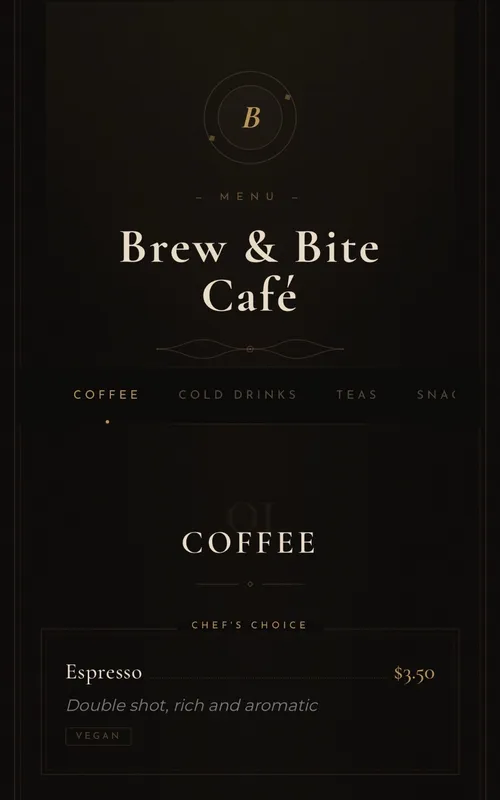
Luxury
Elegant typography-based menu for fine-dining restaurants
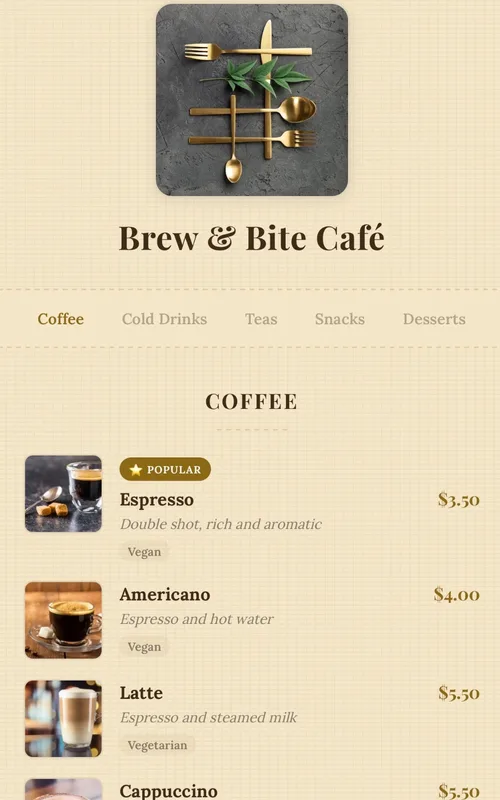
Kraft
Handcrafted paper-textured artisan menu — warm tones, serif typography and dotted price leaders
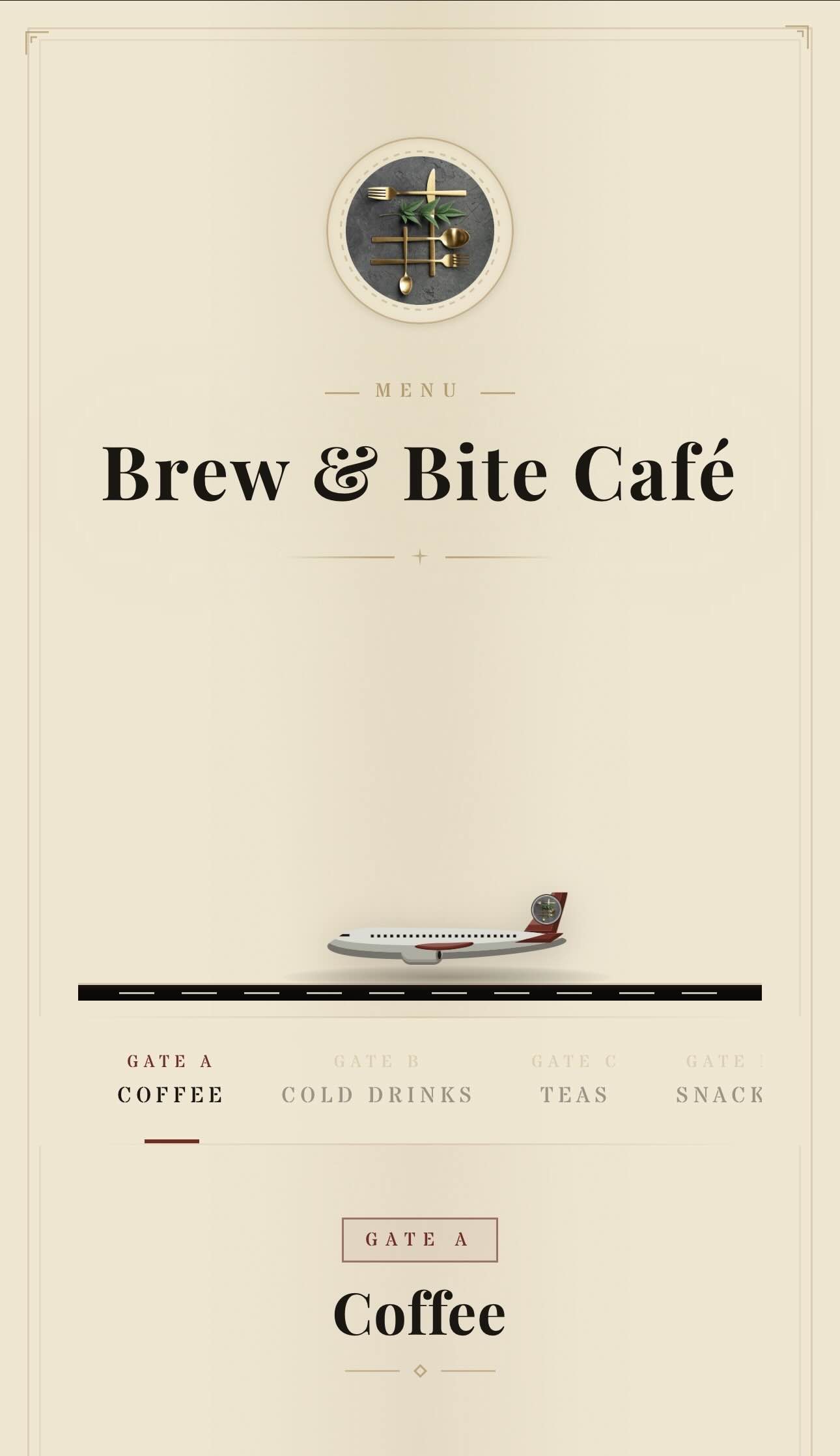
Aviation
Vintage aviation-themed QR menu — animated planes, runway and brass details
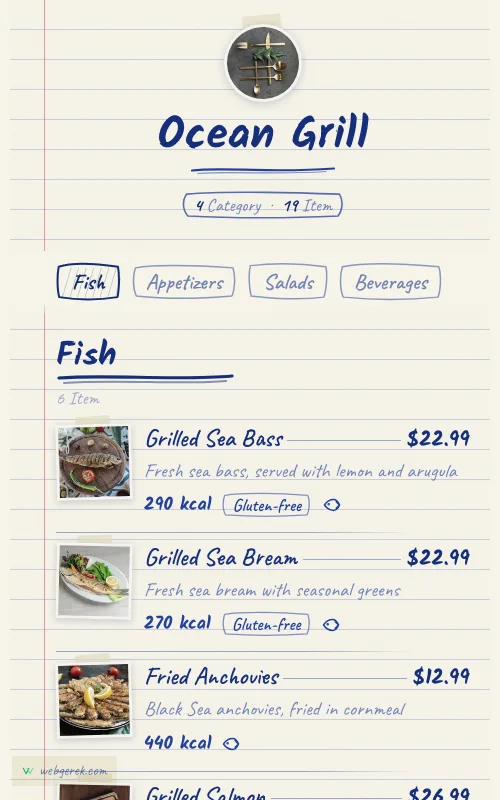
Ballpoint
Handwritten menu in blue biro on ruled notebook paper — course headings in a thicker pen, photos taped to the page
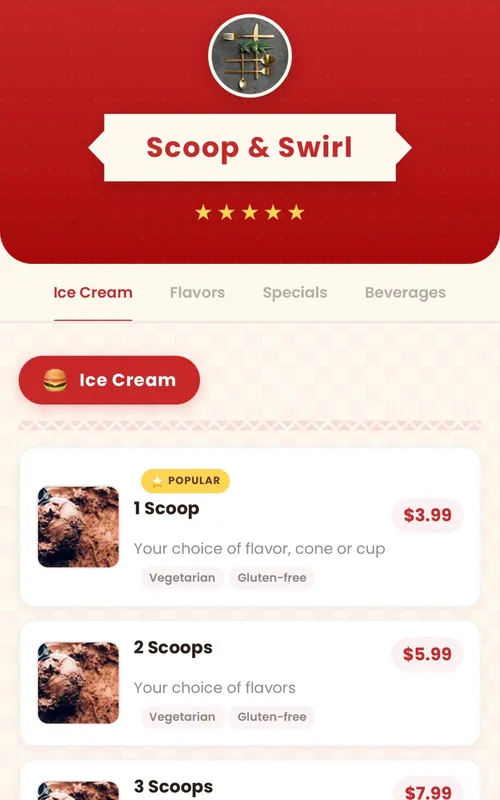
Retro
Fun retro diner-themed digital menu — checkered patterns, ribbon banners and colorful category badges
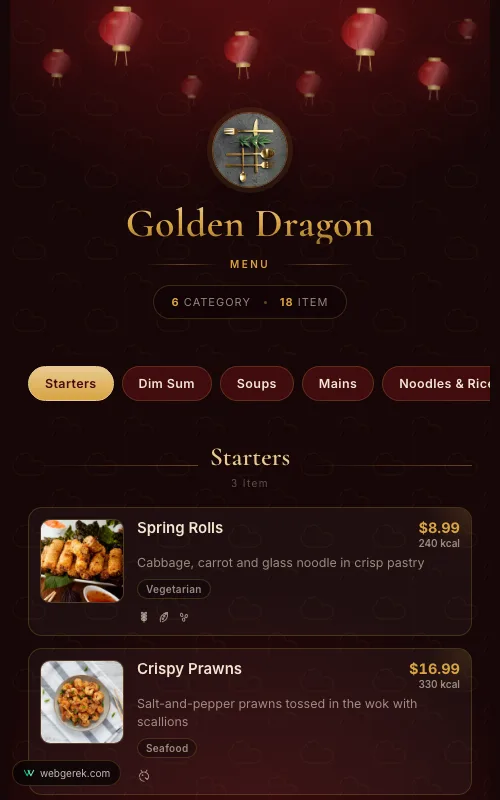
Lantern
Lacquer-red and gold menu under drifting paper lanterns — for Chinese, far-eastern and pan-Asian restaurants
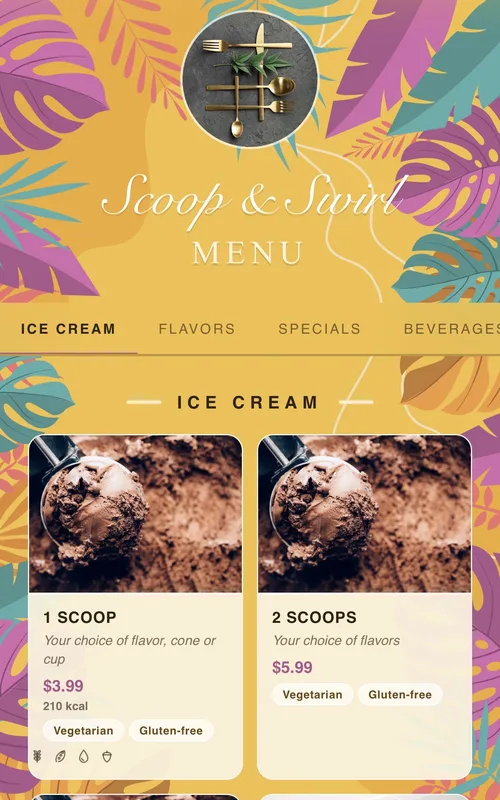
Tropical
Sunny summer-themed menu framed by tropical leaves and flowers — for cocktail bars, beach venues and summer cafés
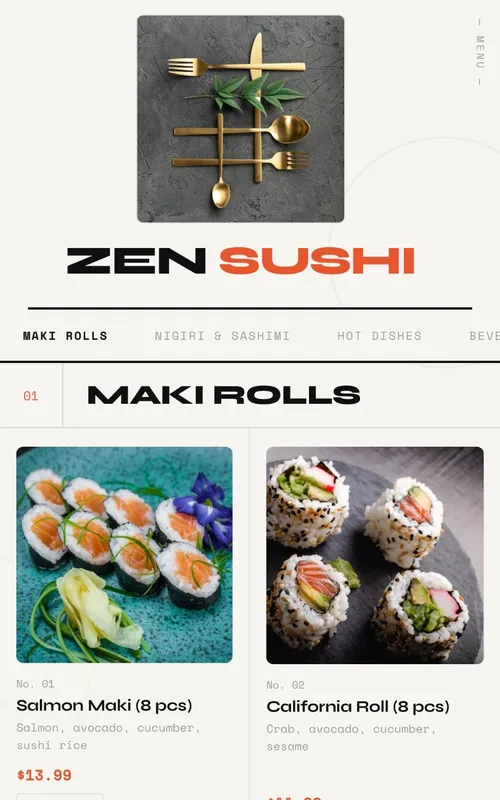
Swiss
Modern menu design with geometric grid layout, bold typography and animations
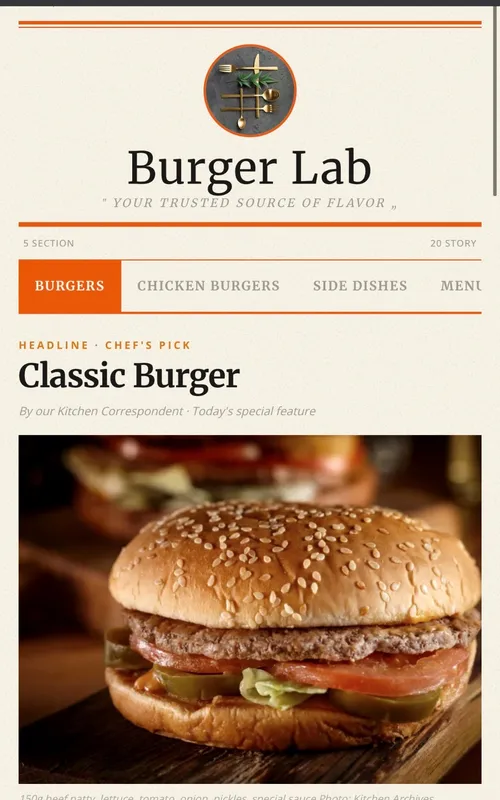
Newspaper
Newspaper-themed creative digital menu — dishes presented as headlines, columns, and news
Frequently Asked Questions
How do I handle three sizes without tripling my menu?
Do I need to mark milk alternatives as allergens?
Is the free plan enough for a single coffee shop?
Should the QR code replace my chalkboard?
Related Pages
Bakery QR Menu
If your food case is the main event — daily production and sell-outs.
Free QR Code Menu
Exactly what the free plan covers for a single-site café.
QR Menu Examples
Nine live designs, including the warm daytime palettes.
Spanish & Multilingual Menus
Four languages behind the same counter code.
Your Menu, Live in 10 Minutes
Start on the free plan. No credit card, and no per-table or per-scan fees.
150+ restaurants, cafés and bars on Web Gerek